Report on the discussions held at the Université du Québec à Montréal on 9 November 2026
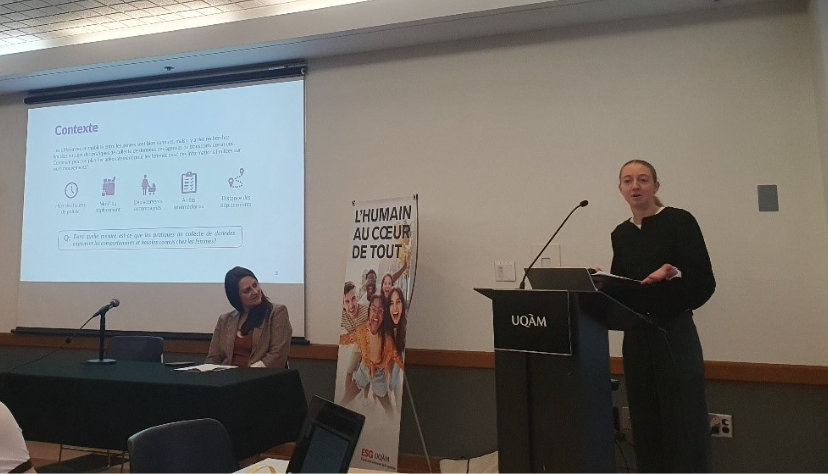
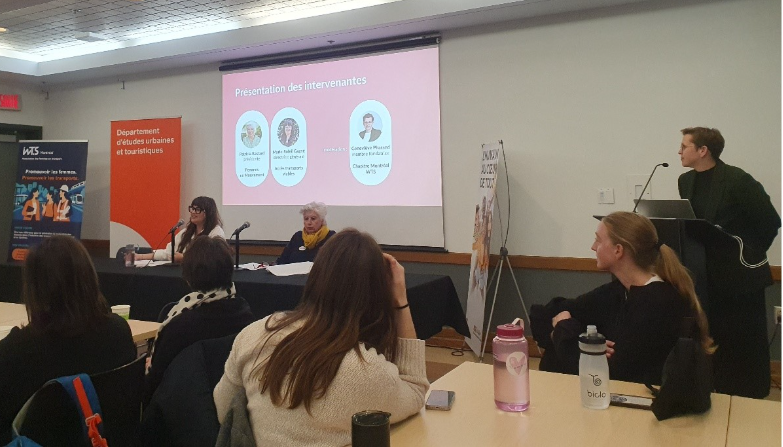
Women account for more than half of public transport users, yet their needs remain poorly documented. On 9 November, the “Entretiens Jacques Cartier” on women’s mobility brought together researchers, transport authorities and safety managers at UQAM. Community organisations from Quebec and France also took part in the discussions. They demonstrated that planning based on averages can fail to address very real inequalities.
What the data reveal
In Montreal, the ARTM’s ‘Perspective Mobilité’ survey indicates that 53 per cent of public transport users are women, 55 per cent of whom use buses. However, their travel patterns do not resemble those of men:
- They travel more frequently between 8 am and 5 pm, whilst men travel earlier in the morning and later in the evening.
- Their reasons for travelling are more varied: shopping, healthcare, accompanying others. Planning solely around access to work is therefore insufficient.
- A higher proportion of women make no journeys at all during the course of a day (32 per cent compared with 27 per cent of men), which raises issues of independence, particularly amongst older women.
Research from Geneviève Boisjoly’s laboratory at Polytechnique de Montréal adds a spatial perspective. Work-related destinations are concentrated towards the city centre for men and towards the north for women. Women also have more localised travel patterns, shorter walking distances to transport stops and slower walking speeds. These differences call for a review of the transport corridors and performance criteria typically used.
What we are not yet measuring
Olivia MacAskill presented an analysis of 34 data collection tools used by 12 transport agencies from Vancouver to New Brunswick. Gender is already included in 70 per cent of cases. However, other key dimensions still need to be better covered:
- family journeys (10 per cent);
- perception of distance to the network (10 per cent);
- stopovers (20 per cent);
- safety concerns (30 per cent).
Journeys that are avoided or not made due to a lack of safety, money, accessibility or service are not captured in the statistics. As summarised in one of Hamzeh Alizadeh’s contributions, ‘what is not measured risks being ignored, and what is measured on average can mask inequalities’. To reduce this blind spot, the ARTM has switched to an annual survey since 2026 and has added questions specifically targeting the barriers to public transport use.
Safety: a prerequisite for access to mobility
The perception of safety carries as much weight in modal choice as objective safety does. A Transport for London study cited during the discussions indicates that 40 per cent of women surveyed have already decided against a journey for this reason. Safety is therefore not merely a criterion for service quality: it determines access to mobility.
The round-table discussions compared the approaches taken by the STM, Sytral Mobilités and the Lyon Metropolitan Area. Whilst the contexts differ (universal accessibility in Montreal, a gender-based approach in Lyon), several measures overlap:
- exploratory walks;
- on-demand alighting;
- reporting of unsafe situations;
- support for victims of harassment and violence.
In Lyon, the fight against sexist harassment also relies on awareness-raising campaigns and ‘safe buses’. For its part, the STM is focusing on its 2026–2027 safety plan, on teams on the ground and on partnerships, as well as on universal accessibility.
An intersectional approach
The ‘women’ group is not homogeneous. According to a survey conducted in Quebec and presented by ‘Accès transports viables’, 39 per cent of women were unable to travel last February for reasons beyond their control. This proportion rises to 57 per cent among women in precarious circumstances and to 58 per cent among women with disabilities or of diverse gender identities. Hence the value of gender-differentiated analysis from an intersectional perspective (ADS+). This analysis is presented as a practical analytical framework and a decision-making tool – a pair of ‘glasses’ for identifying inequalities.
Participants pointed out, however, that intersectional analysis remains challenging due to a lack of reliable and sufficient data, particularly regarding adapted transport and people of diverse sexual and gender identities.
How should networks be planned?
The issue of gender highlights a broader challenge. How can we plan networks that meet the requirements of universal accessibility, in all its aspects, whilst also improving efficiency?
From these discussions, Transamo has drawn up practical guidelines for transport authorities, local authorities and their partners:
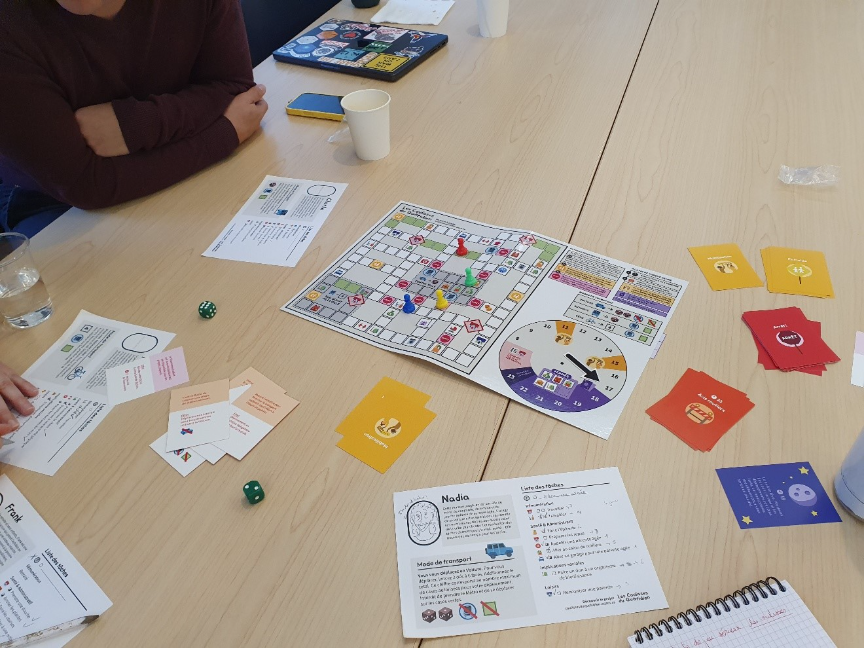
- Raise awareness and equip the teams responsible for planning studies, for example using tools such as the serious game *Les coulisses du quotidien* (Behind the Scenes of Everyday Life), developed at UQAM, which simulates the challenges of everyday life.
- Enrich data collection: reasons for travel, off-peak hours, accompanied journeys, intermediate stops, perceptions of safety and journeys not made.
- Integrate equity into assessments and scenarios: accessibility, safety and diverse needs must form part of the evaluation of options.
- Measure the distribution of benefits – not just the overall benefits – across different population groups and areas. Equity indicators can support this approach.
- Take a cross-cutting approach: planning, operations, prevention and awareness-raising must be considered together.
These guidelines are in line with the ARTM’s Vision 2050: half of all journeys made by active and collective modes of transport. This objective requires addressing the real diversity of mobility needs.
Our perspective
Better measurement means better planning.
At Transamo, we are already incorporating these findings into our studies, and we are continuing to refine our approach:
- more refined surveys and data collection tools;
- equity indicators in our planning studies;
- spatial analyses cross-referenced with actual usage patterns.
Our aim: transport networks designed with everyone who uses them in mind.
Let’s discuss your sustainable mobility project
Are you developing a transportation initiative or have questions about integrated mobility? The Transamo Canada team is here to help you. We offer advice and resources to address your needs and challenges.
Contact us at contact_transamo.canada@transamo.com
